Endodontics in Barberá del Valles
Endodontics: Saving Teeth, Restoring Smiles
At ES Dental Clinic, we preserve your smile and dental function with advanced techniques, even in complex cases such as multi-rooted molars. After treatment, we reinforce the tooth with aesthetic and durable materials. It’s the best option to maintain your natural teeth, prevent future problems, and regain your confidence when smiling.
Es Dental ClÍnic, specialists in endodontics
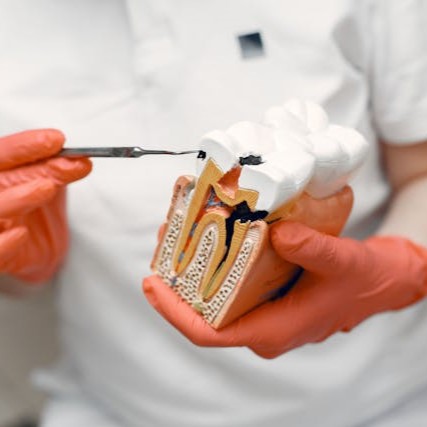
Endodontics, commonly known as root canal treatment, is a specialized technique for treating severely damaged or infected teeth. The procedure involves removing the affected dental pulp, cleaning the inside of the tooth, and carefully sealing it to prevent further infection. This treatment eliminates pain and infection, keeping the tooth in place and preserving its function. It is the best alternative for maintaining your smile without the need for extraction.
After root canal treatment, the tooth may require additional restoration. We use high-quality crowns or composite resins that restore the tooth’s strength and natural appearance. Especially in back teeth, such as molars, this reinforcement is essential to withstand the force of daily chewing.
Choosing a root canal means choosing to preserve your natural tooth. Avoiding an extraction not only maintains your smile but also prevents misalignment and bone loss. Even in complex cases, such as a root canal on a multi-rooted molar, the treatment allows you to save the tooth and maintain the functionality of your mouth.
At our clinic, we believe in restoration, not replacement. Thanks to advances in endodontics, we transform seemingly unsalvageable teeth into functional, healthy, and aesthetically perfect ones. If you’re wondering whether endodontics can help you, the answer is almost always yes.
What are the benefits of endodontics?
Endodontics preserves natural teeth, improving chewing function, allowing for efficient and healthy chewing, and preventing problems related to tooth loss.
Endodontics preserves natural teeth, which helps maintain an aesthetic smile, preventing tooth loss that could affect facial harmony.
Endodontics prevents future problems by eliminating infections and saving damaged teeth, avoiding the need for extractions and possible long-term oral health complications.
Do you have any questions?
What is a root canal?
Endodontics is a dental procedure that involves removing the damaged dental pulp, cleaning the root canals, and carefully sealing them to prevent future infections. It is a key technique for preserving teeth that might otherwise have to be extracted.
When is it necessary to perform a root canal?
Root canal treatment is recommended when there is persistent pain, prolonged sensitivity to heat or cold, inflammation, or abscesses. It is also necessary in cases of deep cavities or trauma affecting the tooth root. In more complex cases, such as two -rooted or multi-rooted root canals , the procedure is adapted to the tooth’s anatomy to ensure its success.
How long does a root canal take?
The duration of a root canal depends on the complexity of the case. A root canal in a molar, for example, may require between one and three sessions, although it is most commonly performed in a single session. In general, the treatment duration can vary between 30 and 60 minutes per session.
What are the advantages of endodontics?
Endodontics allows you to save a severely damaged or infected tooth, avoiding extraction. It preserves the tooth structure, maintaining the functionality and aesthetics of your smile. Furthermore, it prevents alignment problems and bone loss, and improves oral health by eliminating deep infections.
Is a root canal painful?
No. Local anesthesia is used during the procedure, so it is completely painless. It is normal to feel some discomfort after the root canal, but it is usually mild and manageable with pain relievers.
What symptoms indicate that I need a root canal?
Symptoms that indicate you need a root canal include severe or prolonged tooth pain, persistent sensitivity to heat or cold, swelling or abscesses in the gums, and changes in the color of the affected tooth. These symptoms may be signs of infection or damage to the dental pulp.