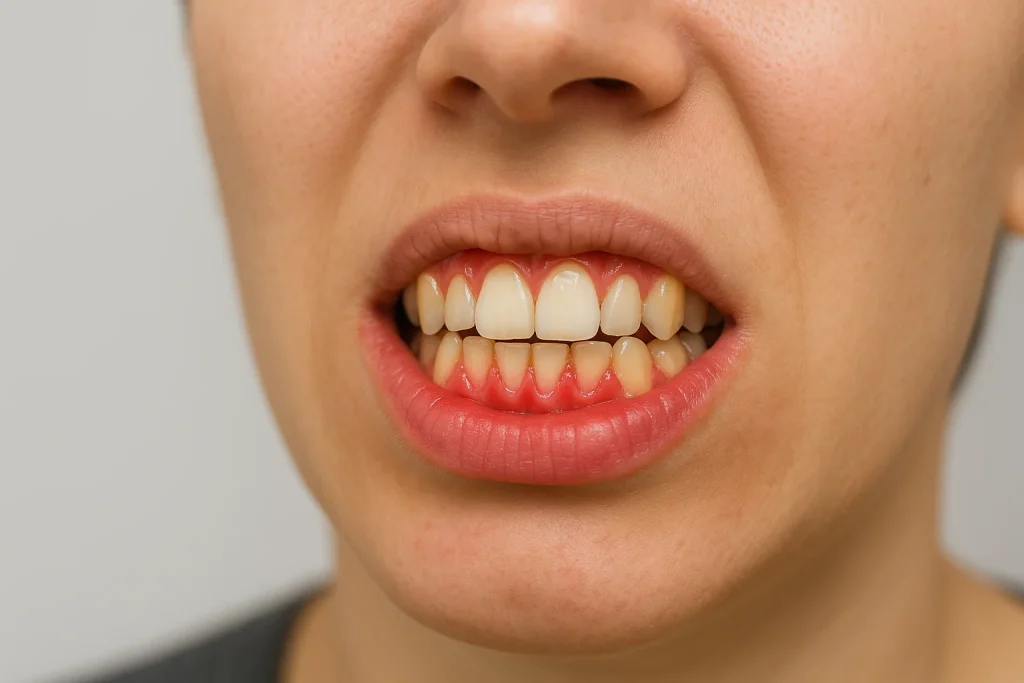

Gum inflammation can be caused by multiple factors, but it is usually an early warning sign that something is wrong with our oral hygiene or health.
Why do gums become inflamed?
Swollen gums are usually related to the accumulation of bacterial plaque, although they can also be due to other reasons.
Main causes of swollen gums
Poor oral hygiene
- Insufficient or incorrect brushing
- Accumulation of tartar and bacterial plaque
- Improper use of dental floss
Hormonal changes
- Pregnancy, menstruation, or menopause can cause increased sensitivity and inflammation in the gums.
Low immunity or illness
- Weakened immune system
- Poorly controlled diabetes
- Vitamin deficiencies, especially vitamin C
External factors
- Tobacco and alcohol
- Poorly fitting orthodontics or prostheses that rub
- Use of very harsh mouthwashes
What symptoms accompany gum inflammation?
Detecting warning signs early can help us prevent the problem from getting worse.
Common signs that we shouldn’t ignore
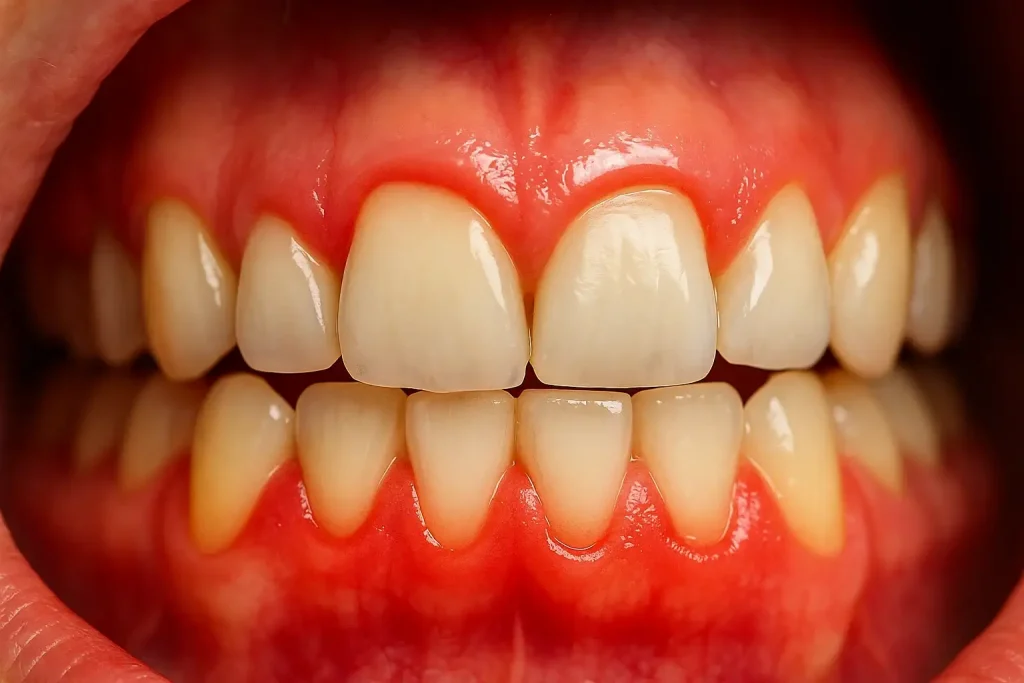
- Redness and swelling of the gums
- Mild or sharp pain when brushing
- Spontaneous bleeding or bleeding when using dental floss
- Persistent bad breath (halitosis)
- Tooth sensitivity
How to relieve inflamed gums at home?
There are simple measures we can take at home to reduce inflammation, especially if the problem is mild.
Helpful home remedies for swollen gums
Natural rinses
- Warm salt water: gently disinfects and reduces inflammation.
- Chamomile or sage infusion: calming and antibacterial properties.
Improved hygiene routine
- Gentle brushing with a soft bristle brush
- Daily use of dental floss with the correct technique
- Alcohol-free mouthwashes are best if they are formulated for sensitive gums.
Habits that help
- Drink more water to keep your mouth hydrated
- Avoid very acidic, spicy, or sugary foods
- Do not smoke or consume alcohol during inflammation.
When should we go to the dentist?
If the inflammation does not improve within a few days or occurs repeatedly, it is important to seek medical attention.
A professional will be able to detect if it is a mild case of gingivitis, a more advanced case such as periodontitis, or even if there are external factors such as a poor fit of orthodontics or prosthetics.
In addition, a professional check-up can include a thorough dental cleaning to remove accumulated tartar.
Can gum inflammation be prevented?
Yes, maintaining a good daily hygiene routine and going for regular checkups is the best way to prevent gum problems.
Key recommendations for preventing swollen gums
- Brush your teeth after every meal using a good technique
- Use dental floss or interdental brushes daily
- Get a professional dental cleaning every 6 months
- Maintain a balanced diet, rich in vitamins
- Do not ignore occasional bleeding gums
Healthy gums are the foundation of good oral health
Gum inflammation is not a minor problem. Detecting it early and adopting good habits can prevent future complications.
If you’ve ever noticed bleeding, discomfort, or sensitivity in your gums, pay attention. Sometimes, a small change in your daily routine can make all the difference.