

Tooth sensitivity has a way of appearing when you least expect it and turning a special moment into a rather uncomfortable experience. Has it ever happened to you? Maybe you were just about to enjoy a cold drink, an ice cream dessert, or a beverage that would brighten your day… and suddenly a sharp pain in your teeth ruined your plans.
If you’re wondering why this happens or how you can prevent it, relax, you’re not alone. Many people ask themselves the same questions: “Why do my teeth suddenly hurt in the cold?” or “Is there a solution?”
It’s not uncommon to feel a bit lost when this type of discomfort appears. Is there anything you can do? Does changing your routine help? There are several treatments for tooth sensitivity, but which ones actually work?
Stay tuned, because here I’m going to tell you in a simple way why tooth sensitivity occurs and, above all, how you can relieve and prevent it so that it doesn’t steal another moment of your well-being.
What are the most common causes of tooth sensitivity?
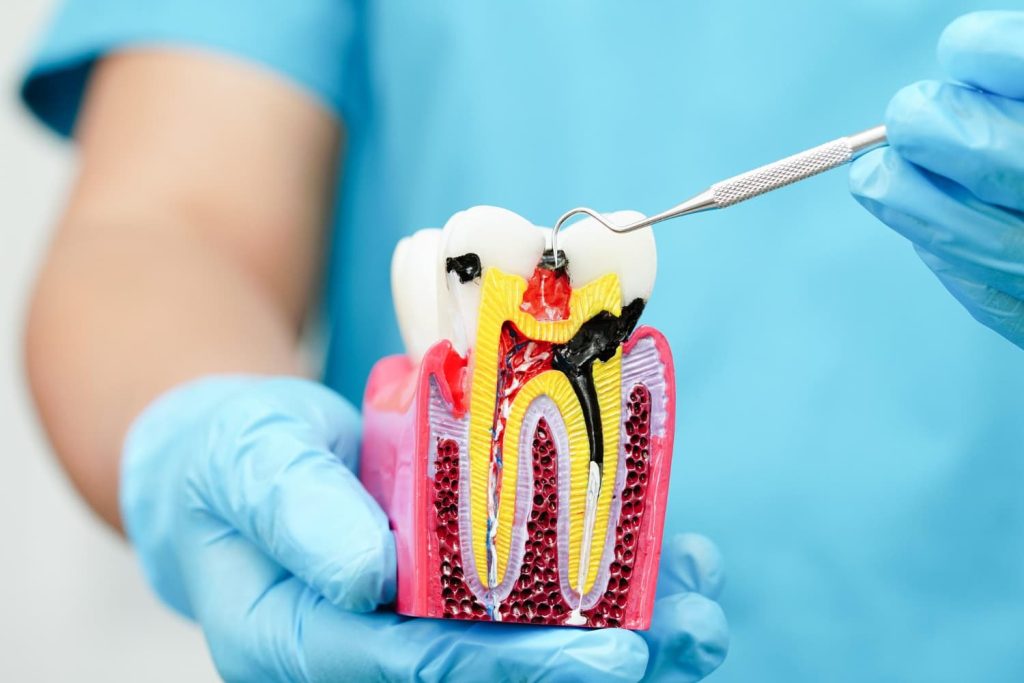
In most cases, tooth sensitivity occurs because the dentin (the sensitive part of the tooth) is exposed.
- Enamel acts as a protective shield over the dentin. But when this shield wears away or the gums recede, exposing the root, the effects of cold, heat, or sweets reach the nerve directly.
Among the most common causes of tooth sensitivity are:
- Brushing too vigorously (yes, here more force does not mean cleaner, believe me).
- The continued use of bleaching products without the supervision of a specialist.
- Gum diseases that cause gum recession.
- Consuming acidic foods or drinks frequently, such as juices, soft drinks, or even vinegar.
- Bruxism, that involuntary habit of clenching or grinding your teeth at night.
- Dental treatments such as deep cleanings or intensive whitening.
Do you recognize yourself in any of these points? We tend to think that sensitivity appears “without warning,” but there is almost always a clear explanation; it just sometimes goes unnoticed in the routine.
Desensitizing products: do they really help relieve tooth sensitivity?
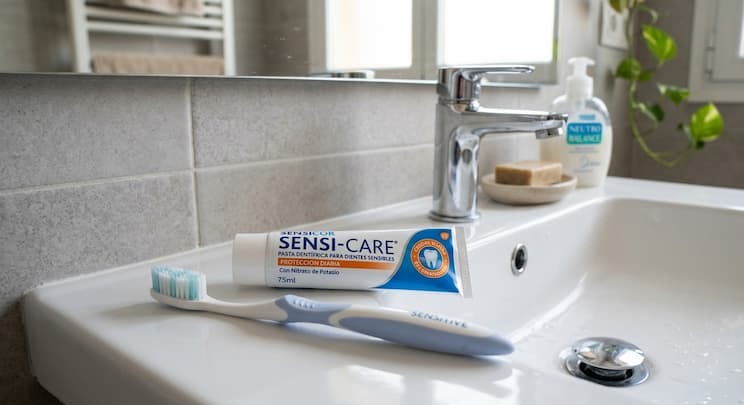
Toothpastes and mouthwashes for sensitive teeth are formulated to block the direct pathway connecting the tooth surface to the nerve. This helps to soothe the pain and give you relief.
If you’ve recently been to the oral hygiene section of a pharmacy, you’ve probably seen a huge variety of products for sensitive teeth. Marketing, reality, or a bit of both? The truth is that some desensitizing toothpastes and mouthwashes really do work, as long as you use them consistently and know how to get the most out of them.
- Potassium nitrate: blocks the transmission of pain signals between the outside and the nerve.
- Strontium chloride: helps to close the dentin canals.
- Dental fluoride: strengthens the enamel and therefore protects what lies beneath.
How can you get the most out of them?
- Switch your usual toothpaste for one designed for sensitive teeth.
- Use it consistently for at least four to six weeks. Patience will be your greatest ally here.
- Complement your routine with a special rinse for sensitivity after brushing.
A little tip: avoid alcohol-based mouthwashes, as they can irritate the mucous membranes and, instead of helping, may even worsen sensitivity. And really, don’t get discouraged if you don’t see results right away. Give it some time and, above all, use these products in conjunction with gentle brushing: the difference can be remarkable.
Importance of fluoride: Why is dental fluoride recommended for sensitive teeth?
It is no coincidence that so many dentists insist on dental fluoride: this mineral strengthens the enamel and protects against sensitivity.
You’ve probably been hearing from your dentist and seeing ads about “the power of fluoride” for quite some time now. It might sound like a marketing gimmick, but it’s actually quite the opposite. Fluoride acts as a bodyguard for your enamel, helping to protect it from external factors.
- It remineralizes (repairs) weakened enamel, making it more resistant.
- It creates a kind of shield that isolates the dentin.
- It reduces the “gateway” of painful stimuli in the dentin tubules.
Practical ideas for applying fluoride if you have sensitivity:
- Always choose toothpastes that contain the right amount of fluoride.
- If the problem is severe, ask your dentist to apply fluoride varnish professionally.
- Consider fluoride mouthwashes, but don’t overdo it. Here, as with almost everything, more isn’t always better.
Isn’t it amazing what this simple mineral can do for your daily peace of mind? Fluoride, despite its tiny size, can become your greatest ally for smiling peacefully (and without unpleasant surprises).
Additional factors that can increase tooth sensitivity
Besides enamel wear or receding gums, there are other, more hidden reasons that can cause your teeth to react to cold, heat… or the unexpected.
What if you’re still experiencing discomfort after all that? The reason might not be toothpaste. There are some less obvious but equally important factors worth considering.
- Fractures or micro-fissures: sometimes, a small, invisible crack makes that sensitivity become a recurring annoyance.
- Small cavities: even a tiny hole can be the cause of that sharp pain when eating ice cream or drinking coffee.
- Recent dental treatments: deep cleanings, fillings, or going through orthodontics can make your teeth temporarily more sensitive.
What if none of the above works?
- Don’t give up: come to us, we can identify hidden problems.
- Request diagnostic tests to rule out infections or internal injuries.
- Don’t ignore persistent sensitivity; it may be a sign of something more serious, and the sooner it’s addressed, the better.
What are the most effective steps to prevent and treat tooth sensitivity?
| Recommended actions | Benefits | Frequency |
|---|---|---|
| Gentle brushing with a fine bristle brush | Less wear on enamel and gums | 2-3 times a day |
| Daily use of specific toothpaste | Less sensitive and better protected teeth | Daily |
| Periodic application of dental fluoride | Reinforced barrier against external aggression | Weekly or professional |
| Low-acid diet | Less erosion and less risk of sensitivity | Always |
| Regular checkups with your dentist | Detecting small problems early | At least twice a year |
| Avoid teeth grinding | Goodbye to microfractures and unnecessary wear | Use of a night splint |
See? Protecting your teeth from sensitivity often depends on small, easily manageable steps. All you need is consistency and a little daily attention.
Frequently Asked Questions: Demystifying Tooth Sensitivity
Why does tooth sensitivity appear suddenly?
It almost always happens because the enamel has worn away suddenly, the roots are exposed after a dental cleaning, or because your diet has become too acidic in a short period of time.
What should I do if my teeth hurt in the cold?
The first step is to switch to a desensitizing toothpaste and avoid very cold or hot foods. If the problem persists after several days (say, a week), consult your dentist.
How long does it take for tooth sensitivity treatment to take effect?
Most people notice improvement after 2-4 weeks of using appropriate products and being consistent with their routine.
How can I prevent tooth sensitivity in the future?
Take care of your oral hygiene, use gentle brushing techniques, visit your dentist regularly, and avoid harsh products. If you make these habits part of your routine, I assure you that sensitivity will be nothing but a bad memory.
Tooth sensitivity sometimes seems like just a passing annoyance. But if you’ve experienced it, you know how much it can disrupt your plans and your mood.
After trying countless things, I can tell you that small daily changes (in brushing technique, toothpaste type, and overall care routine) usually work most of the time. However, if there’s no improvement after a few weeks, seek professional help. Don’t underestimate the pain, and don’t put it off thinking it will go away on its own.
Ready to enjoy those moments you love so much, without fear of the cold or unexpected events? The solution to tooth sensitivity is much closer than you think. Decide when the discomfort ends and smile with confidence again.