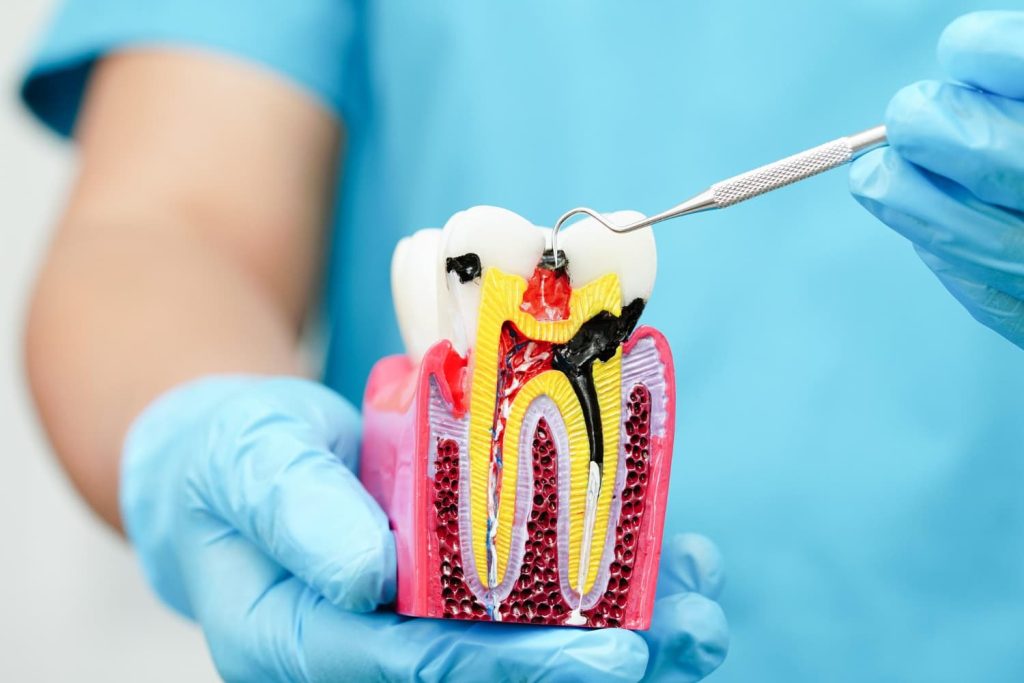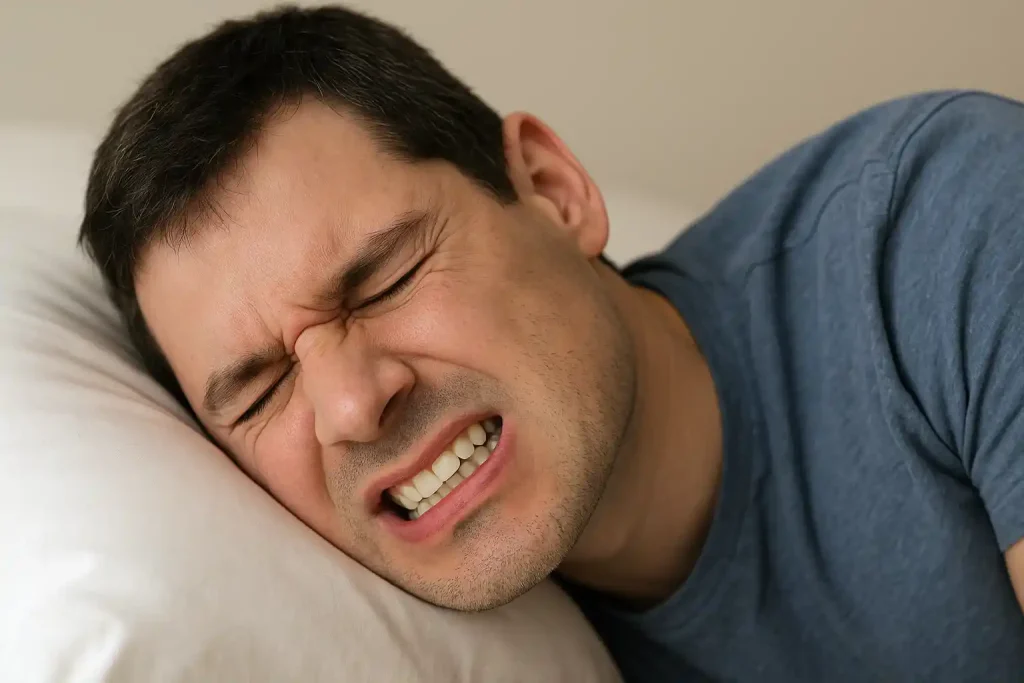

Grinding your teeth at night, known to dentists as nocturnal bruxism , is more common than you might think. Detecting it early helps prevent more serious complications.
What does it mean when I grind my teeth at night, and why does it happen?
Nocturnal bruxism is an involuntary activity in which teeth are clenched or ground while sleeping. The causes can be both physical and emotional.
Main causes of nocturnal bruxism
Several factors may be behind this involuntary habit:
- Stress and anxiety: One of the most frequent causes. The body releases tension through teeth grinding.
- Dental alignment problems: Malocclusions or misaligned teeth can cause pressure when closing the mouth.
- Sleep apnea: Some people with sleep apnea also experience bruxism.
- Stimulants before bed: Such as coffee, alcohol, or even certain medications.
- Genetic factors: It can be inherited, and is more common in people with a family history.
How can you tell if you grind your teeth while sleeping?
Often we are not aware that we are doing it until we notice certain discomforts or someone close to us hears it.
Signs and symptoms that may alert you
Pay attention to these signs, as they may indicate a case of bruxism:
- Jaw pain upon waking
- More worn or sensitive teeth
- Headache upon waking
- Nighttime creaking noises noticed by the partner or any family member
- Tension in neck and shoulders
- Trouble opening the mouth completely

What consequences can there be if it is not treated?
Ignoring nighttime bruxism can lead to dental and muscular complications that worsen over time.
Possible medium and long-term effects
- Fractures or wear of the tooth enamel
- Loose teeth or even tooth loss
- Chronic pain in the jaw or neck
- Temporomandibular joint (TMJ) disorders
- Sleep disturbances and accumulated fatigue
What can be done to prevent teeth grinding at night?
Changing certain habits, managing stress, and seeking professional solutions can make all the difference.
Useful recommendations for preventing nighttime bruxism
Lifestyle changes
- Establish a relaxing sleep routine
- Avoid caffeine, alcohol, and tobacco before bed
- Apply moist heat to the jaw to relax it.
- Reduce excessive use of mobile devices at night
Relaxation techniques
- Deep breathing before sleep
- Yoga or daily meditation
- Psychological therapy if there is anxiety or persistent stress
Recommended treatments
- Occlusal splints
- Dental adjustments or orthodontic treatments if there is malocclusion
- Physiotherapeutic therapies for the temporomandibular joint
When is it advisable to visit the dentist?
If symptoms recur or pain becomes constant, it is best to consult a specialist.
Early diagnosis allows for intervention before tooth wear or discomfort worsens. Furthermore, a professional can determine if there are other associated causes, such as alignment or sleep problems, and recommend the most appropriate treatment.
Taking care of our teeth even while we sleep
Nighttime teeth grinding (bruxism) is a sign that something is wrong. Paying attention to the symptoms and seeking help can prevent more serious long-term consequences.
Sleeping well and without tension is a fundamental part of our oral health. If you notice any discomfort or think you might be grinding your teeth at night, don’t ignore it.