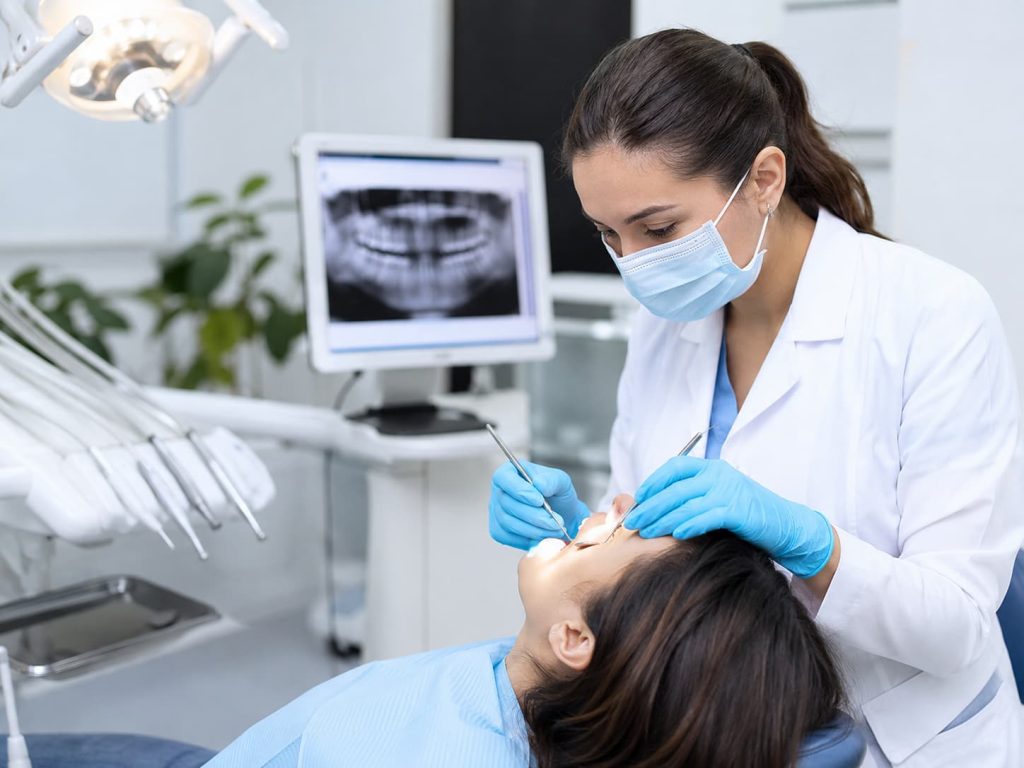
Have you ever imagined that visiting the dentist could be as “technological” as using an app to order food or watch your favourite television series? Artificial intelligence has entered dental clinics and, far from being a passing trend, is revolutionising diagnoses and treatments. Naturally, this raises the usual questions: does it genuinely perform better? Is it all simply marketing? Above all, can an algorithm be as reliable as your trusted dentist?
Today, I invite you to discover just how far artificial intelligence is reaching within dentistry. It can improve accuracy and accelerate results while opening a fascinating debate about ethics and trust. Are you ready to find out whether we are looking at the future… or simply another technological advance?
Introduction to artificial intelligence in dentistry
Imagine that behind the monitor in the dental surgery there is a “digital brain” that never becomes distracted or tired. This is essentially how artificial intelligence works in dentistry: it uses highly advanced machine-learning and deep-learning algorithms capable of studying enormous quantities of data and helping clinicians make more accurate decisions than ever before.
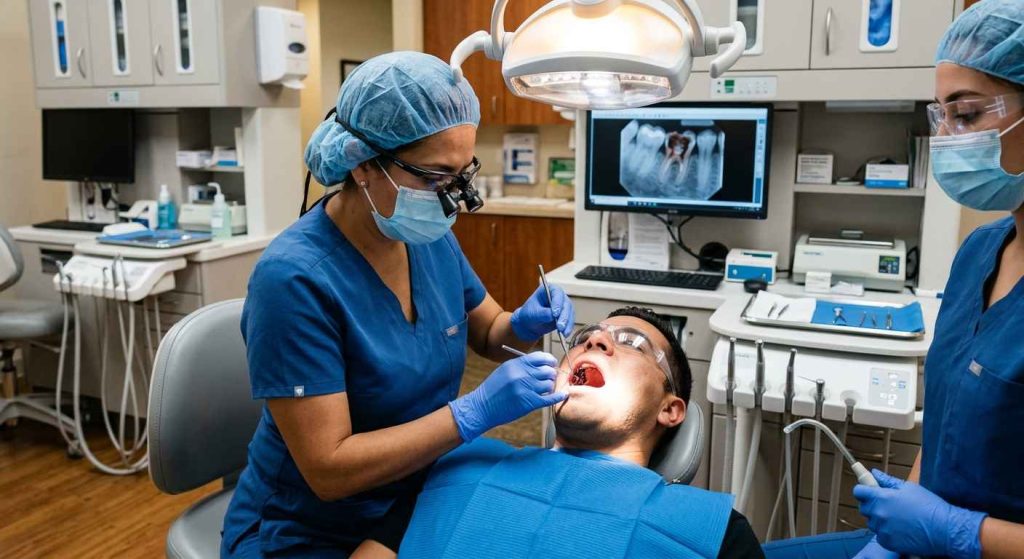
What does this mean for you as a patient? For example, AI can analyse X-rays, CBCT scans and even saliva tests, detecting signs that may sometimes go unnoticed even by experienced professionals. Imagine having a “digital assistant” that reduces the margin for error and delivers results within minutes.
These advances are not exclusive to elite clinics. Tools such as Diagnocat, Pearl AI and Denti.AI are making precise digital diagnosis more widely accessible. The key is understanding that artificial intelligence does not replace dental professionals; it complements their work. New technology becomes less intimidating when you understand how it can help you, and patients genuinely have a great deal to gain.
Applications of artificial intelligence in dental diagnosis
If there is one area in which AI is working its magic, it is dental diagnosis. Platforms such as Diagnocat and Pearl AI have transformed how panoramic X-rays and CBCT scans are interpreted. The software can identify early cavities, small lesions and periodontitis long before they become evident to the naked eye.
Tools that are changing the game:
- Diagnocat: particularly effective at analysing X-rays with a high level of accuracy.
- Pearl AI and Overjet: support the automated detection of cavities and other abnormalities.
- Denti.AI: specialises in segmenting cases and predicting how treatments will progress.
Think about the dozens of images that pass through a dental clinic every day. Analysing all of them with the same level of detail would be almost impossible for a person, but it is an easy task for AI. Dentists can therefore work more quickly and meticulously while leaving less room for error.
Did you know that systems capable of analysing saliva and reception-based triage chatbots already exist? From the first point of contact, the experience becomes faster and more personalised: you can receive guidance and book an appointment according to the urgency of your case.
How artificial intelligence improves dental treatments
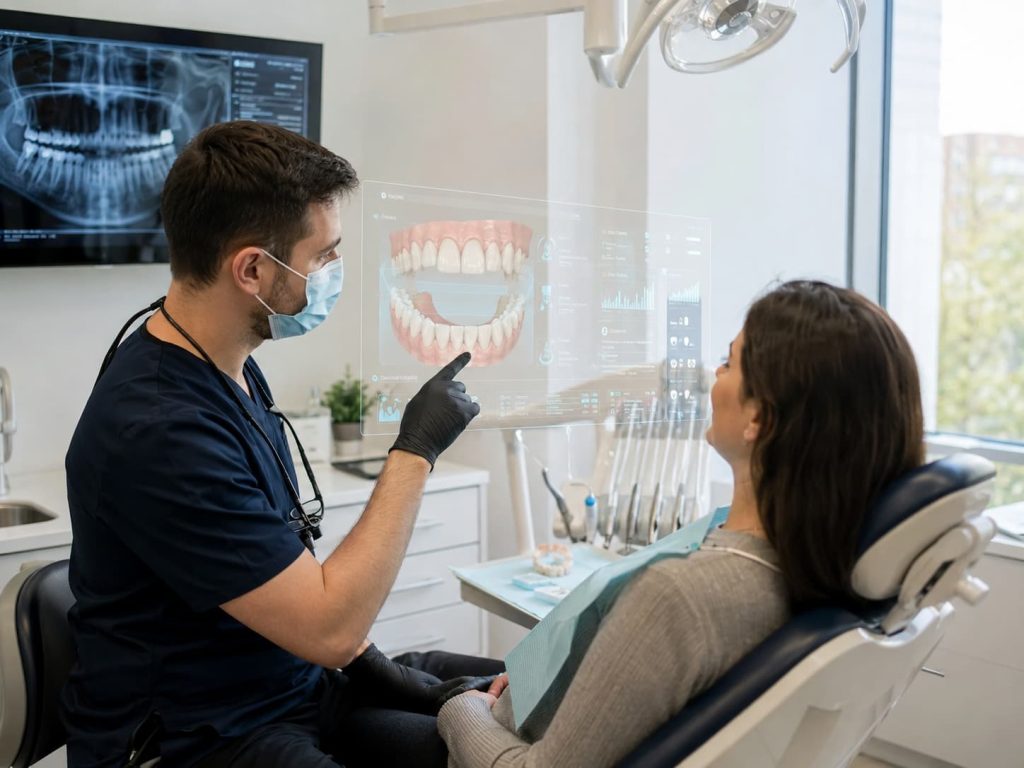
Intelligent diagnosis is impressive, but the real revolution begins when artificial intelligence helps personalise dental treatment. This is already a reality thanks to solutions that enable remote adjustments during clear-aligner treatment and help professionals anticipate potential complications.
Naturally, human experience and clinical judgement remain irreplaceable. However, having AI supervise every stage of treatment is like using a dental GPS that alerts you whenever the process begins to deviate from its planned route.
How do you notice the difference as a patient?
- Fewer visits to the clinic: apps such as Smilelife and Quantum Howl allow treatment progress to be monitored remotely.
- Bespoke implants: programs such as coDiagnostiX and 3Shape Implant Studio design and adjust highly personalised implant treatments.
- Real-time monitoring: DentalMonitoring allows you and your orthodontist to see how the process is progressing each day and whether any adjustments are required.
Can you see the difference between conventional monitoring and digitally supervised treatment? AI can sometimes detect tiny discrepancies that might go unnoticed by the naked eye. That additional accuracy can make the difference between a good result… and an exceptional one.
Benefits of artificial intelligence for accuracy and efficiency
Accuracy is probably the greatest “superpower” of artificial intelligence in dentistry. If you have ever wondered whether your diagnosis was correct, AI can provide an additional opinion informed by thousands of previous cases.
What advantages does this offer you?
- Faster results: less time spent waiting because many processes are performed almost automatically.
- Fewer diagnostic errors: AI does not become distracted or tired and can detect details that are almost invisible to the human eye.
- Bespoke treatments: there are no standard plans; every treatment is adapted to the patient’s actual needs.
Think of it this way: Diagnocat can review every X-ray taken during the day without becoming tired and with the same level of concentration from beginning to end. If the system can help you avoid an unnecessary procedure, why not take advantage of that intelligent assistance?
Challenges and ethical considerations when using AI in dentistry
Of course, it is not all straightforward. Introducing artificial intelligence into dentistry also presents challenges. For example, do you have complete confidence in how your personal information is handled? Platforms such as Behappy Odontología and SmileAvenue make efforts to protect privacy, but zero risk does not exist, and this needs to be considered.
Main challenges to consider:
- Excessive dependence: what happens if the system fails when you need it most?
- Data protection: privacy must be protected while maintaining the convenience and speed of digital services.
- Ethical decisions: regardless of how effective an algorithm may be, the final decision should remain in the hands of a qualified professional.
How much do we really want to delegate to machines? AI can be an excellent ally, but it can never replace the empathy and common sense that distinguish a good dentist. Unpredictable cases or situations that fall outside existing models can arise, and human intuition remains unrivalled in those circumstances.
The future of artificial intelligence in modern dentistry
The future of dentistry is exciting, combining technology, science and a more human element than you might expect. Artificial intelligence will extend much further, making prevention, bespoke diagnoses and individualised care the norm. Can you imagine a clinic combining AI, 3D printing and personalised saliva analysis? Early experiments are already taking place.
More intelligent software will not be the only development. We will also see the integration of chatbots capable of interpreting emotions and solutions that connect your digital medical history within seconds, reducing waiting times and improving results.
The future lies in balancing cutting-edge technology without losing sight of the human element. No matter how perfect a digital diagnosis becomes, we will always look for someone who sees us, listens to us and understands us.
Advantages and challenges of AI in dentistry
| Advantages | Challenges |
|---|---|
| Faster diagnoses | Protection and ethical use of clinical data |
| Greater accuracy and fewer errors | Dependence on technology |
| Personalised and adaptable treatments | Constant maintenance and updates |
| Remote monitoring and follow-up | Lack of empathy and human contact |
Artificial intelligence in dentistry is here to stay
We can say with certainty that it is changing what we understand by a “good diagnosis” and an “effective treatment”. The benefits are compelling: speed, accuracy and personalisation. However, regardless of how far technology advances, the value of an experienced and empathetic dentist will remain essential.
The ideal future is one in which AI and dentists work together. This will allow you to smile knowing that you have the best of both worlds. Would you trust your smile to this balance between technology and humanity?