
Have you ever been told that you need a dental crown and immediately felt overwhelmed by everything that comes next? I am talking about multiple visits to the dentist, waiting for weeks —or even months—, impressions that feel like a test of courage and, of course, the uncomfortable feeling of being unable to smile confidently. The good news is that something significant is happening in dentistry, even if it might initially sound like science fiction: CAD/CAM systems have arrived to change the rules of the game.
You may have seen an advert or heard someone mention “same-day crowns” or the “digital design of dental crowns” and wondered: does it really work? Is it just an advertising hook? It is not. In fact, it is much more interesting than it sounds. If you have ever had doubts about its reliability or aesthetic results, here we will explain everything openly, using real names, technology and examples, so you can make your decision with all the information you need.
How are CAD/CAM systems used in dentistry?
Imagine walking into a clinic such as ES Dental Clínic and being told: “We will make your crown today, and you will leave with a smile ready for any selfie.” This is not an exaggeration. CAD/CAM systems have made it possible to digitise, design and manufacture dental prostheses, including crowns, veneers and bridges, using computers and specialised equipment in record time.
- Manufacturing dental crowns in a single day —yes, the same day you arrived with a broken tooth.
- Personalised design of aesthetic veneers: using software such as 3Shape or coDiagnostiX, every smile can be as unique as your personal style.
- Creating partial prostheses, bridges and even implant-supported restorations.
Who can benefit from this technology? It is particularly useful for restoring teeth that are visible when you smile and molars, where a perfect fit on the first attempt is especially important. Tools such as biogeneric design allow the software to learn from your natural bite and create restorations specifically adapted to you. The result is clear to see: the restoration looks surprisingly natural, without the drawbacks associated with traditional methods.
What does the digital dental crown design process involve?
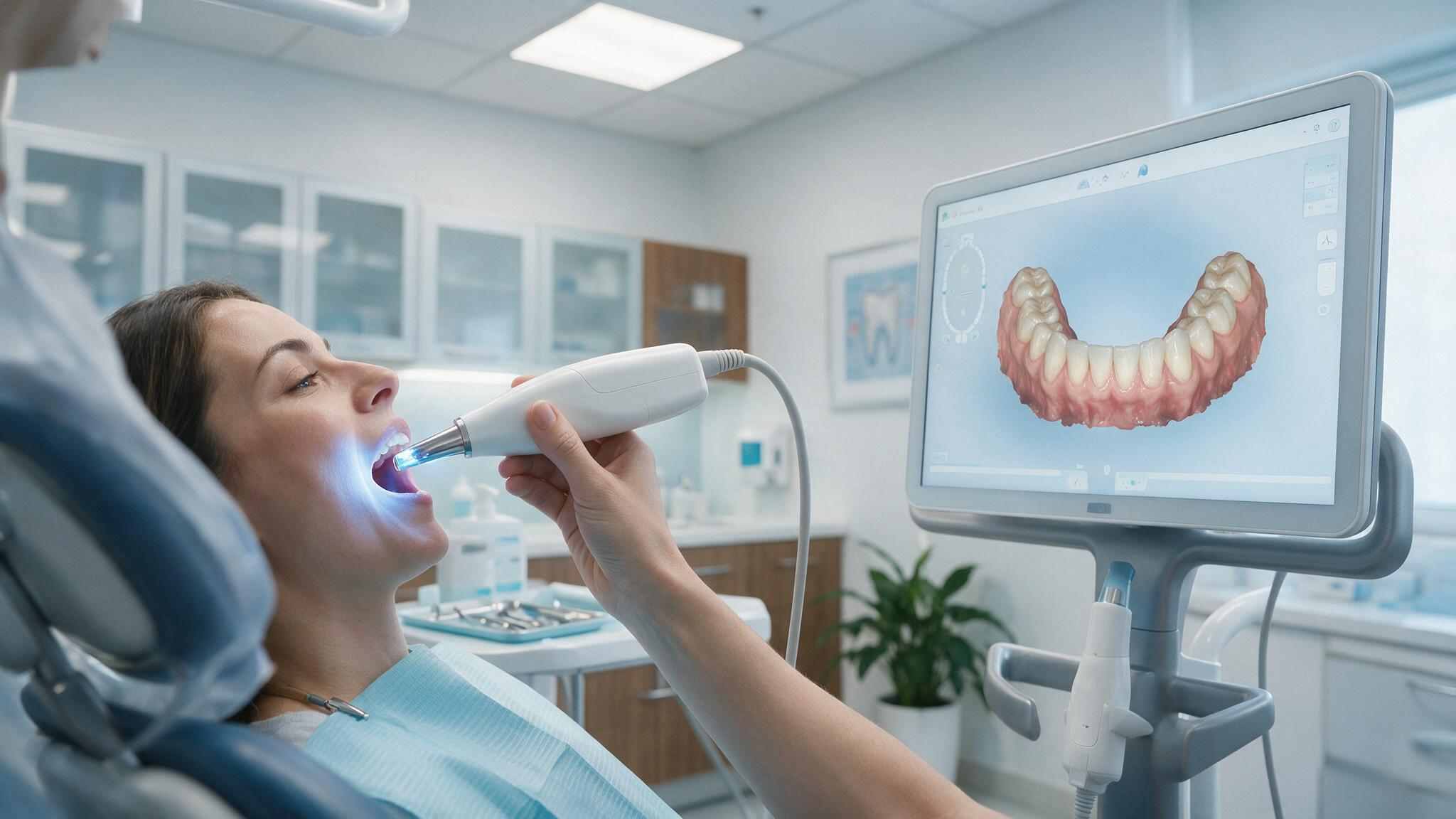
The process known as “digital crown design” begins by saying goodbye to uncomfortable moulds. Everything starts with a 3D scan of your mouth: a quick, comfortable process without unnecessary discomfort for the patient.
- Intraoral scanning: devices such as those manufactured by Sirona are used to take an extremely detailed digital impression of your teeth. No more sticky impression materials or nausea.
- Software-based design: the dentist can digitally model the crown, choosing its shape, colour and even its level of shine.
- Almost immediate approval: you can see the result on a screen before anything is manufactured. You can provide feedback and adjust the details if you wish.
Can you imagine seeing your new smile on a screen before it even exists? This option provides considerable reassurance and is one of the aspects most valued by patients who choose this system. Even the smallest detail can be modified, eliminating the uncertainty of wondering how everything will look when you return two weeks later.
| Stage | CAD/CAM method | Traditional method |
|---|---|---|
| Taking the impression | Digital intraoral scanner | Silicone or alginate moulds |
| Design | Biogeneric 3D software | Wax and manual techniques |
| Approval time | Minutes | Days |
What are the advantages of fast and accurate same-day manufacturing?
Here comes the best part: CAD/CAM technology makes it possible to design and manufacture your dental crown within a few hours, without requiring you to wear an uncomfortable temporary restoration that, let us be honest, nobody wants.
- Extremely fast: the complete process can take between one and two hours, including scanning, designing, milling and fitting the crown.
- Impeccable fit: the high level of accuracy significantly reduces the need for adjustments, and the restoration usually fits perfectly from the outset. Less discomfort and more smiles.
- Less stress and anxiety: every dental visit drops a few places on your list of least favourite activities. You can return to your routine —and recover your smile— on the same day.
Does it not sound almost like something from a film? You arrive with a damaged tooth and leave with it restored, without even having enough time to become nervous. CEREC crowns can achieve such a natural colour and appearance that even highly trained eyes often struggle to notice the difference.
What are the advantages of using dental CAD/CAM technology?
It is not only about speed. CAD/CAM systems offer clear advantages for both patients in the dental chair and the professionals who prepare it every day.
- Less waiting: dental restorations completed in a single day.
- Bespoke and predictable results: thanks to digital design, both the appearance and function of the restoration can be adapted precisely to your smile.
- Fewer common human errors: because the process is guided more extensively by technology, there is less room for mistakes or unexpected results from the laboratory.
Would you rather depend on a six-week manual process or participate in every digital stage and see the result in real time? Technology means that we no longer have to settle for traditional methods, particularly when we want a well-made restoration without endless delays.
What materials are used to manufacture digital dental crowns?
Dental materials have undergone an extraordinary transformation. Today, you can choose finishes and shades that once seemed almost like science fiction. Their durability is equally impressive.
- Lithium disilicate: ideal for front teeth because it is translucent and looks natural even under the most unforgiving lighting.
- Zirconia: the highly versatile option, ideal for molars or areas requiring greater strength. It is so durable that it can withstand almost any bite.
- Feldspathic ceramic: the leading choice for veneers, offering excellent aesthetics but slightly less strength.
Did you know that you can now choose not only the exact colour but also the type of shine and degree of opacity? Dental laboratories have also embraced 3D printing and new milling methods that take the final finish to another level.
How are digital impressions and computer-aided manufacturing integrated?
The magic of CAD/CAM systems does not lie solely in printing or milling. It also lies in the way the entire process works together digitally, without relying on physical paperwork.
- Digital impressions: the intraoral scan creates a virtual twin of your mouth and transfers it directly to the software. This eliminates waiting times, errors and lost information.
- Instant data transfer: everything is connected —your images, preferences and even your comments— using programs such as 3Shape or coDiagnostiX. This makes communication between the dentist and the milling machine extremely reliable.
- Chairside manufacturing: within minutes, the milling machine transforms the digital design into a physical restoration with almost watchmaker-like precision.
It may sound like the level of coordination seen in a film, but results improve considerably when all the components “speak the same digital language”. The workflow is so efficient that the benefits of the finished restoration can be seen in its appearance and felt in the restored tooth.
What real results do CAD/CAM systems provide? Clinical cases and experiences
You do not need to accept the claims blindly. Clinics such as SmileAvenue and Amores Dental report figures that support them. Patients leave satisfied with restorations that are durable, functional and natural-looking.
- Proven results: in follow-up studies, up to 98% of patients prefer the digital experience, both because of its comfort and the final result.
- Everyday experiences: busy patients choose same-day crowns and often comment on how different the process is from their previous experiences: “goodbye to heavy moulds” or “before I realised it, my crown was already in place”.
- CAD/CAM versus traditional methods: fewer complications, less need for subsequent adjustments and a process that is much easier to fit into everyday life.
Most people who try CAD/CAM systems find it difficult to return to traditional methods. This is not merely a personal opinion, but the experience accumulated over many years by clinics that understand how important time and quality are to their patients.
| Patient experience | CAD/CAM system | Traditional system |
| Time between appointments | 1 day | 1-2 weeks |
| Bite adaptation | Optimal | May require adjustments |
| Final appearance | Very high quality | Variable |
| Comfort when taking impressions | No discomfort | May be uncomfortable |
Where is dental crown design and manufacturing technology heading?
The future is set to become even more digital and personalised. We are moving towards a landscape in which designing and seeing your restoration before it exists will be the rule rather than the exception.
- New 3D printers and advanced materials: soon, clinics will be able to print not only crowns but also implant components and surgical guides, all bespoke and manufactured at the clinic.
- Even more intelligent software: artificial intelligence will help anticipate dental wear, adapt designs to changes in your mouth and even choose the colour that best suits your skin tone or habits.
- Complete integration: clinics, patients and laboratories will be connected seamlessly and in real time, saving time and reducing errors and misunderstandings.
Can you imagine arriving at the dentist, having your mouth scanned within seconds and choosing how you want your finished smile to look while you are still there? Some technical details will still need to be refined, and impossible feats will remain impossible, but the entire experience will continue to become more comfortable and intuitive.