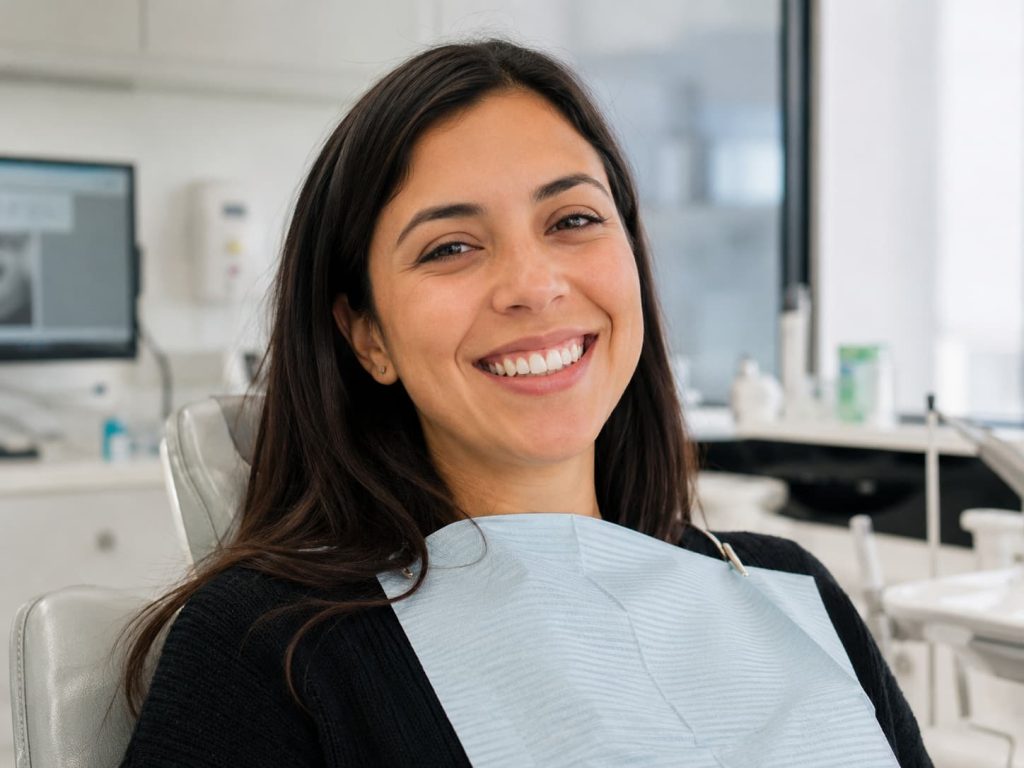
Does the mere thought of dental anaesthesia send a shiver down your spine? You are not alone. For many people, the image of a large needle is one of the main reasons for postponing a dental appointment. Even those who consider themselves brave often admit it: they are more afraid of the injection than the treatment itself.
However, there is good news: things are changing. Needle-free anaesthesia is becoming available at an increasing number of clinics. Imagine visiting the dentist without that persistent worry: “What if the needle hurts?”. Today, that may already be possible. Although there are still details that few people know about, the changes taking place in minimally invasive dentistry are genuinely revolutionising oral health care.
The big question is: how has this leap towards comfortable, trauma-free treatments become possible?
Development of electrical charge systems for pain-free anaesthesia
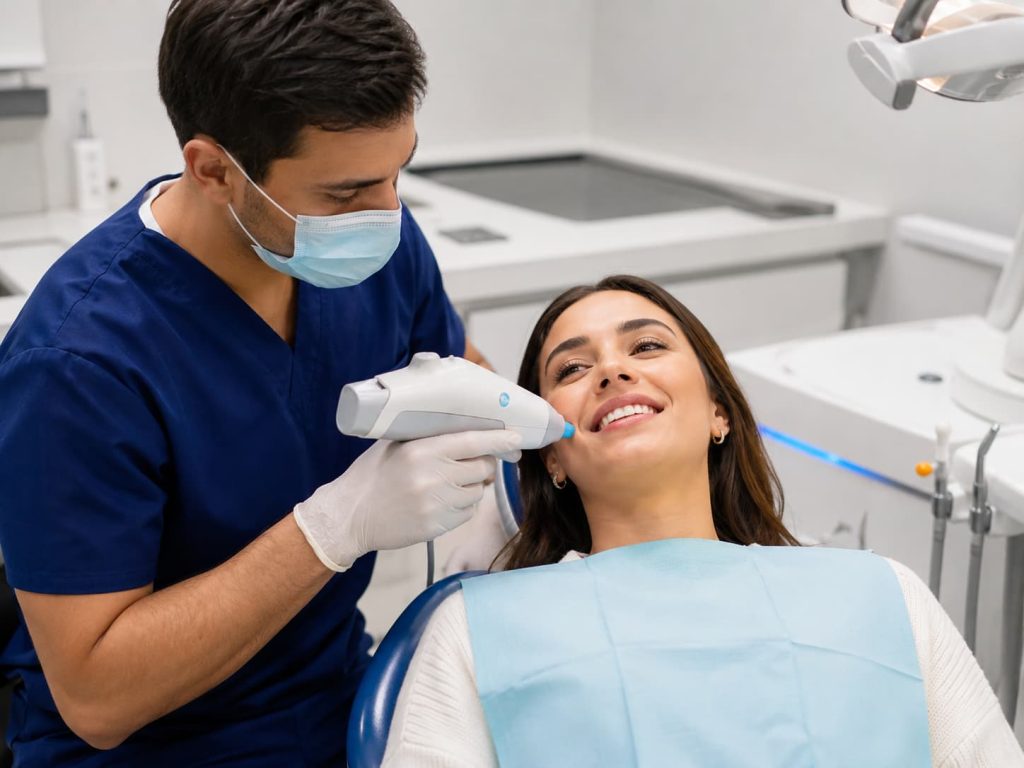
The real revolution in dental anaesthesia has arrived with electronic devices designed to eliminate the needle. Did you know that equipment capable of administering highly precise anaesthesia without a single puncture already exists? The key lies in technology: small, carefully controlled electrical charges that numb specific areas of the mouth almost as if by magic, without causing pain.
- How do they work?These electronic dental anaesthesia systems use electrical micro-impulses to help anaesthetic molecules pass gently through the oral mucosa. As a result, patients barely feel anything and their fear seems to disappear.
- Immediate benefits
- No more injections.
- Anxiety before and during treatment decreases significantly.
- The anaesthetised area recovers much more quickly.
- A personal comparisonIn the past, even a simple procedure could feel like an ordeal. Thanks to these advances, visiting the dental clinic can now genuinely feel like just another appointment in your day. No panic and no trauma.
Is this technology available to every clinic? An increasing number of modern clinics, including ES Dental Clínic, are investing in these solutions. After all, why would anyone want tense and frightened patients when they can be relaxed and comfortable in the dental chair?
Innovative technologies that reduce fear and pain during anaesthetic procedures
The question is simple: why do we continue associating dental appointments with suffering when gentler alternatives to traditional anaesthesia are already available?
Modern dental technology has made enormous progress, embracing electronic dispensing devices, anaesthetic sprays and topical gels. This combination achieves something remarkable: it can even eliminate the memory of the needle.
- What are the main innovations?
- Computer-controlled anaesthesia systems: small devices administer the anaesthetic at precisely the right pressure, preventing pain from developing.
- Advanced anaesthetic gels: these act extremely quickly and are ideal for short or minimally invasive procedures.
- Fast-acting sprays: perfect for anyone who sees a needle… and immediately wants to run away!
- Less fear of the dentist? Absolutely.There is no trick involved: simply knowing that no needles will be used helps patients relax as soon as they walk through the door. The effect can be that powerful.
- Are there still any disadvantages?As with every new technology, investment and professional training are required. However, the benefits for patients and clinicians can be appreciated from the very beginning. Patients no longer sit trembling and wondering: “When are they going to inject me?”. Quite simply, because it no longer happens.
Advances in needle-free anaesthesia in dentistry and other areas of medicine
Dentistry pioneered pain-free dental anaesthesia, but these advanced solutions are now spreading to other medical fields. Think about it: how much would our experience change if injections were replaced by more comfortable and less invasive techniques?
- Which dental treatments benefit the most?
- Treating cavities and placing simple fillings.
- Deep dental cleaning and periodontal curettage.
- Procedures for children or patients with additional needs.
- Other medical fields undergoing transformation:
- Dermatology: applying local anaesthesia to superficial lesions.
- Paediatric vaccinations: using microjets instead of syringes.
- Aesthetic medicine: facial fillers and rejuvenation treatments with less stress and greater comfort.
- What does this mean for you?The trauma and fear associated with needles are beginning to become a thing of the past. Once someone tries needle-free anaesthesia, they rarely want to return to the traditional method.
| Context | Traditional method with a needle | Needle-free anaesthesia |
|---|---|---|
| Anxiety level | High or very high | Low or minimal |
| Pain during application | Frequent | Virtually non-existent |
| Recovery time | Relatively slow | Much faster |
Benefits of needle-free anaesthesia for patients and healthcare professionals
Talking about the benefits may seem obvious, but every detail matters. What do you genuinely gain —whether you are a patient or a professional— by switching to these techniques?
- For you as a patient:
- You can say goodbye to your fear of the dentist, particularly if you become nervous or have children who hate needles.
- The experience is much less traumatic, with no injections, bruising or distress beforehand.
- You recover more quickly because the anaesthetic targets the necessary area without needlessly numbing half of your face.
- For you as a professional:
- Treating frightened patients becomes much easier and more rewarding.
- You gain greater control over the anaesthetic dose and reduce the risk of errors.
- Your practice becomes known for innovation and compassionate care, helping to strengthen patient confidence and loyalty.
A final thought:
In the world of oral health, providing effective treatment is not the only thing that matters. What truly matters is caring for the comfort and peace of mind of the person sitting in the dental chair. A dental clinic that succeeds in eliminating fear is already halfway towards earning its patients’ trust.
- Why try needle-free anaesthesia at your next appointment?
- You can relax because the dreaded injection is no longer part of the process.
- You reduce the risk of cross-infection associated with needles.
- The technology is safe and supported by rigorous studies.
The future of anaesthesia: less invasive and more comfortable for patients
Think about this: you arrive at the clinic, receive your treatment and return home fifteen minutes later, feeling as relaxed as if nothing had happened. That is precisely the promise of advanced dental technology: fast, pain-free procedures offering all the guarantees we expect today.
- Emerging trends
- Devices that are becoming smaller and more powerful.
- Bespoke anaesthesia adapted to each treatment.
- Intelligent systems that adjust the dose for each patient.
- And in everyday practice…Clinics such as ES Dental Clínic are already preparing to make this decisive leap. If you are someone who always postpones dental check-ups because of fear, this could be the perfect time to return without excuses.
- What you will never miss again:Once you experience needle-free treatment, even the memory of the syringe begins to disappear. Minimally invasive dentistry is not the future: it is already the present.
In conclusion, innovations in needle-free anaesthesia: less fear, less pain are completely transforming the experience of visiting the dentist. This is no longer only about technical progress. It is about restoring calm and well-being during every appointment. If you are looking for comfortable and compassionate dental treatment, now is the time to choose one of the most advanced options in modern dentistry.
What if you finally left your fears behind? Speak to your dental clinic, consult professionals such as those at ES Dental Clínic and take that step you have found so difficult. You will not regret it: the needle-free era is here to stay and, believe me, nobody misses the needles.