
Do you still associate going to the dentist with having uncomfortable, sticky impression material placed inside your mouth while you count down the seconds until the ordeal is over? If you have ever postponed an appointment simply to avoid the traditional “mould”, you should know that you are not alone. The good news is that those days are numbered. Dentistry took a giant leap forward some time ago with the intraoral scanner, and I can assure you that once you discover it, you will see your next dental appointment in a completely different light.
But beyond comfort, is it really worth it? Is it as accurate and fast as promised? And what about that reassuring feeling of being in good hands simply because technology is on your side? If these questions have been on your mind, read on. Together, we are going to explore how this innovation works and why digital diagnosis is no longer the future, but the present of dentistry. I promise that the way you think about “going to the dentist” will change completely.
What are the advantages of an intraoral scanner in digital diagnosis?
The intraoral scanner has transformed the experience for patients, dental hygienists and dentists alike. This small device can capture incredibly accurate images of the inside of your mouth… and best of all, it does so without any uncomfortable procedures or methods that make so many of us break out in a cold sweat.
- Complete comfort: forget about biting into strange impression materials for several minutes. The scanner captures all the necessary information in just a few seconds, without any discomfort or drama.
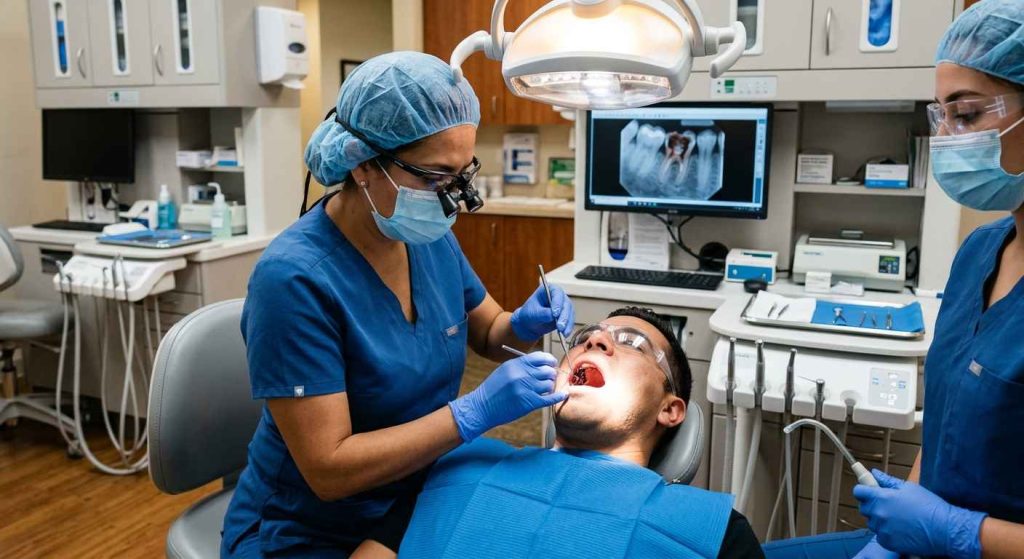
- Immediate results: you can see exactly what the dentist is seeing on the screen, in real time! This makes the entire process quicker, clearer and easier to understand.
- Fewer errors and repeat procedures: no bubbles, poorly positioned trays or having to repeat the entire process because something went wrong. The digital system minimises these errors, saving time and frustration.
Honestly, who would want to go back after trying something like this? If you have already experienced digital scanning, you will know exactly what I mean. If you have not, trust me: once you try it, there is no going back.
How does an intraoral scanner eliminate the discomfort of traditional impressions?
Picture the scene: it is time to take an impression, a tray is placed inside your mouth and, before you know it, you are holding your breath to avoid gagging. That is now a thing of the past. An intraoral scanner uses a small device that moves gently around your mouth to capture all the information it needs, without obstructing your breathing or requiring any heroic effort from you.
You can continue breathing normally, speak if necessary and remain calm. No endless minutes and no anxiety about moving or wondering, “How much longer?”. Just a quick, efficient and completely non-invasive scan.
Simply knowing that you are not going to feel unwell reduces tension from the moment you enter the waiting room. Patients with sensitivity, children and even adults who are afraid of the dentist can breathe a sigh of relief thanks to this innovation because it genuinely makes the experience at the dental clinic much more manageable.
How accurate and fast is an intraoral scanner when capturing digital images?
Have you ever wondered how many traditional impressions have had to be repeated because of one tiny detail? With an intraoral scanner, that concern disappears. Thanks to 3D technology, an exact replica of every part of your mouth can be created, ensuring that even the smallest detail is captured.
Its speed is also impressive: something that previously took days can now appear on the screen within minutes. This accelerates diagnosis and allows treatment plans to begin almost immediately. The result? Outstanding accuracy and far more personalised treatments.
- Traditional method: 10-20 minutes (and if the mould must be sent elsewhere, several days need to be added)
- Intraoral scanner: 1-3 minutes, ready to use
With the digital method, you can say goodbye to human error and time wasted correcting details. It really is that simple.
What benefits does an intraoral scanner offer patients and dental professionals?
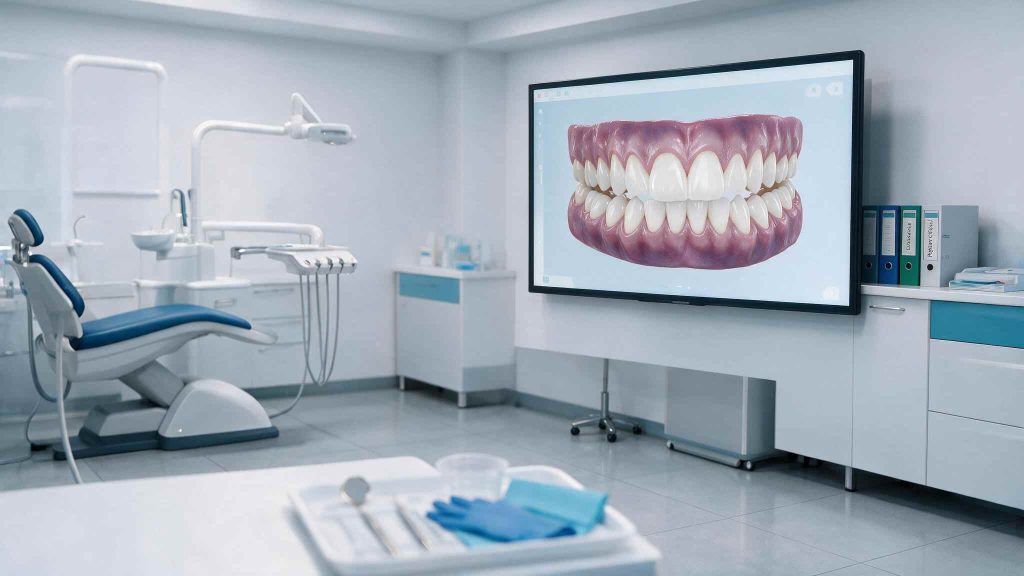
For patients, the advantages are clear: less worry, no discomfort and the opportunity to feel involved in the process, as you can see exactly what the specialist is looking at on the monitor. You will no longer have doubts or feel afraid to ask questions because you can immediately understand what is happening and why one treatment or another is being recommended.
For dental professionals, the improvement is equally significant. There are fewer physical items to store, fewer manual processes and, most importantly, all the information is securely archived and accessible within seconds. Imagine being able to compare images taken over several years with a single click or easily share them with other specialists if necessary. Clinics such as ES Dental Clínic have already noticed a major difference, both in treatment outcomes and in their patients’ smiles — literally and figuratively.
How has innovation in dental technology revolutionised dental diagnosis?
The stressful appointments during which we could only blindly trust what the dentist could see are now a thing of the past. With tools such as the 3D dental scanner, high-definition images can show your mouth like never before: in detail, from every angle and with the option of sharing the digital file almost instantly if another specialist needs to examine it.
This is not only about technology. It is also about making appointments clearer, more approachable and more collaborative. Thanks to this innovation, treatments and preventive care are no longer a mystery. They have become something we can all understand and, above all, actively participate in.
What clinical applications does an intraoral scanner have in dental treatments?
One of the best things about this scanner is its versatility. It has opened the door to a more comfortable way of working for both patients and professionals across different areas of dentistry:
- Digital orthodontics: it makes it possible to see how your aligner treatment will progress, with adjustments and monitoring carried out at every stage.
- Dental prostheses: from crowns to veneers, digital scanning makes it possible to create bespoke restorations that are far more attractive and functional.
- Advanced diagnosis: from tooth decay to small fractures, details that might previously have gone unnoticed can now be detected.
And if you think this technology is only available at large clinics, nothing could be further from the truth. More and more dental centres are embracing this type of technology because, quite simply, those who try it rarely want to return to the old methods.
Why is choosing an intraoral scanner the right decision?
There is no longer any reason to fear traditional dental impressions. If you want to feel heard and comfortable in the dentist’s chair, the intraoral scanner is your best ally. Honestly, it is one of those inventions that you will not want to give up once you have tried it.
Digital dentistry eliminates discomfort, strengthens trust between you and your dental professional and enables fully customised treatments using information you can see and understand immediately. Are you ready to leave impression materials behind and embrace digital diagnosis? It could be the best decision for your smile and your peace of mind.