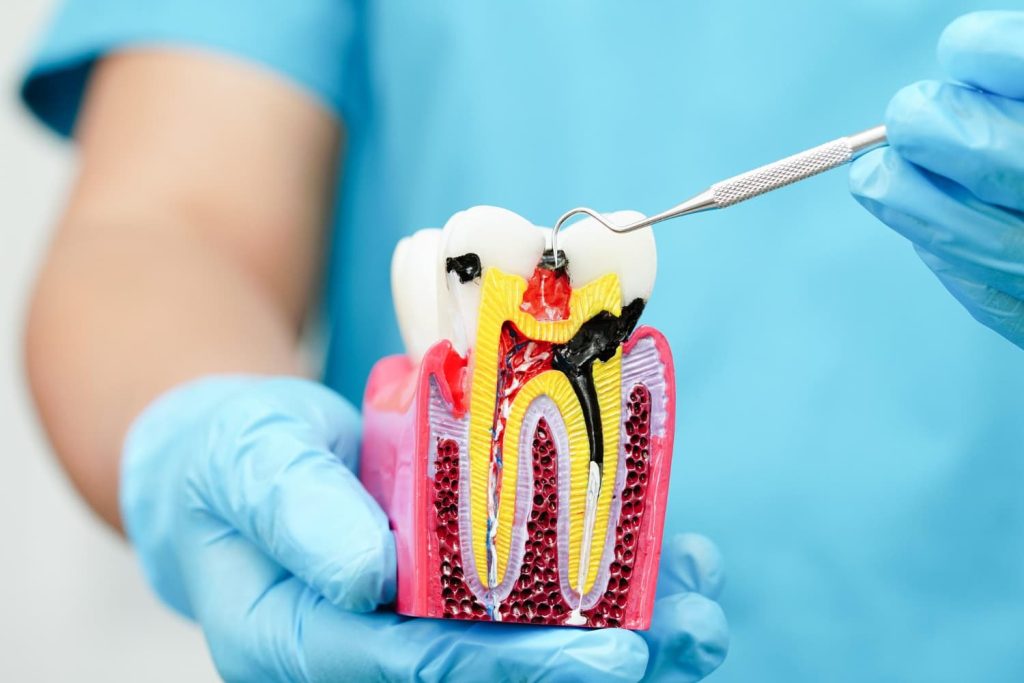


You look in the mirror and see a small dark spot on a tooth. Doubts begin to creep in: Is it serious? Will the filling hurt? You’ve probably heard all sorts of comments from family and friends: about discomfort, about scarring, about the filling falling out sooner than expected. What’s true and what’s just a myth?
The truth is that fillings are one of the most common dental treatments . But, of course, before you sit in the chair, it’s normal to have questions and a few fears. Are all fillings the same? Will I have to change my routine? Can I eat whatever I want afterward? Here are some answers designed for you.
Safety of dental fillings: considerations and recommendations
If you have any doubts, rest assured: getting a dental filling is safe and works wonderfully when done by a trained professional . Almost everyone has had one at least once, and modern materials ensure the procedure is reliable and minimally invasive.
- What is a dental filling? Basically, it’s the process where your dentist removes the decay and fills the cavity with materials like resin or dental amalgam. The goal: to restore your tooth’s function and appearance and prevent the decay from progressing.
- Are there real risks after a filling? If you choose a reputable clinic with qualified professionals, the risk of complications is minimal. The materials used—amalgam and state-of-the-art resins—undergo rigorous quality controls and are approved by recognized health organizations.
- Should I be worried about the filling material? Dental amalgam has been used for decades. It’s true that it contains mercury, which has generated debate, but both the WHO and reputable clinics assure us that, when properly managed, it doesn’t pose a risk to most adults. Composite resin is gaining popularity these days, primarily for aesthetic reasons.
Types of dental fillings: metallic and tooth-colored
We could say there are two main types of fillings: metal fillings and tooth-colored fillings. Want to know which one is right for you?
Dental amalgam fillings
- Advantages :
- Super resistant and durable (they can last you more than 15 years).
- They require less time in the consultation.
- Limitations :
- Dark colors are not exactly the most desirable for front teeth.
- Sometimes it is necessary to remove a little more healthy enamel.
Composite resin fillings (tooth-colored)
- Advantages :
- They blend in very well with the natural color of the tooth.
- They retain more of the original tooth structure.
- Ideal for visible and non-visible areas.
- Limitations :
- Its lifespan is around 5-10 years, although it can be longer if you are careful with your habits.
- They can become pigmented over time if you smoke a lot or if you’re a big coffee fan.
Having trouble deciding? Here’s a quick comparison:
| Type of filling | Duration* | Aesthetics | Compatibility |
|---|---|---|---|
| Dental amalgam | 10-15 years+ | Low | Very high |
| Composite resin | 5-10 years | Very high | Excellent (metal-free) |
*The duration depends on your hygiene, the material chosen, and your daily habits.
Is there such a thing as “perfect” filling material? Honestly, no. The best filling is the one that works well for you, suits your specific needs, and is explained to you in detail by someone you trust.
Post-dental filling care: what to do and what to avoid
Once you leave the dentist’s office with your freshly done filling, aftercare doesn’t have to be a headache. But be aware, a few small details can make the difference between a filling that lasts for years and one that starts causing problems prematurely.
- What to do after the restoration?
- You can eat and drink when the anesthesia has worn off (usually in 1-2 hours).
- If your filling is made of resin, your usual routine can continue almost immediately.
- Brush your teeth gently and use dental floss; this prevents food debris from getting where it shouldn’t and causing new cavities.
- What should you avoid after a filling?
- Do not chew gum, hard candy, ice, or nougat on the first day.
- Are you experiencing discomfort when chewing or closing your mouth? Don’t ignore it and return to the clinic. Your filling may need adjusting.
- Avoid foods and drinks that are too hot or cold for the first 24-48 hours to prevent increased sensitivity.
A small oversight can cause your filling to last much less time. It’s much more common than you think.
Tips for a safe and effective recovery after a filling
The “trick” to making everything go well doesn’t end when you leave the consultation; it’s what you do at home that really makes the difference.
- Regular check-ups : Visit your dentist every 6-12 months. This will allow you to detect any problems with your fillings early and take care of the rest of your teeth.
- Impeccable oral hygiene : Brush at least twice a day, use dental floss or interdental brushes and complete with rinse if you tend to accumulate plaque on the edges of the filling.
- Listen to your body : Do you notice any tenderness, sharp pain, or is the filling loose? Don’t hesitate, make an appointment as soon as possible. It’s better to have it checked early than to let a problem worsen.
Do you realize how such a simple treatment can restore your peace of mind and confidence to smile? It’s not about becoming obsessed, but it’s also not about completely forgetting about it: your role is just as important as the professional’s.
Frequently asked questions: Doubts answered quickly
- Does getting a filling hurt? It shouldn’t. If you have any discomfort after the anesthesia wears off, it usually goes away within 24-48 hours.
- How long does a dental filling last? It depends on the material, the area, and your care: normally it lasts 5 to 15 years… or more.
- Can I get a filling if I’m pregnant? Yes, but don’t forget to tell your dentist so they can take extra precautions.
- Can a filling fall out? It’s rare, but it can happen if you bite on very hard things or neglect maintenance.
The peace of mind of a healthy mouth is in your hands
In short, getting a dental filling is safe, effective, and much less dramatic than we often think . Thanks to modern materials, the experience of professionals, and advanced techniques, treating and preventing tooth decay is almost routine.
The key is choosing the filling that’s right for you, following your dentist’s advice, and maintaining good oral hygiene . Trust us and ask any questions you may have, and don’t put off taking care of your smile.
A well-done filling can be the difference between a minor inconvenience and a serious problem down the line. So if you have any doubts, you know what to do: get informed, stay positive… and you’re sure to smile!