
Sustainability isn’t just about food, fashion, or energy. By 2026, oral care will be increasingly linked to responsible habits, prevention, and conscious choices that impact both health and the environment.
What does sustainable dentistry really mean?
Sustainable dentistry is not based solely on technology or materials, but on a more conscious way of caring for oral health , reducing unnecessary impacts and prioritizing prevention over complex treatments.
In 2026, this trend will be supported by three fundamental pillars:
- Prevention of invasive interventions
- Responsible use of resources and materials
- Patient education
Prevention as the basis of dental sustainability
One of the biggest changes will be understanding that prevention is also a form of sustainability . Daily oral hygiene reduces the need for future treatments.
Fewer treatments, less impact
Preventing oral health problems also reduces:
- The use of clinical materials
- Energy consumption
- The generation of healthcare waste
By 2026, prevention will be seen as a positive action for both oral health and the environment.
More responsible materials and products in everyday life
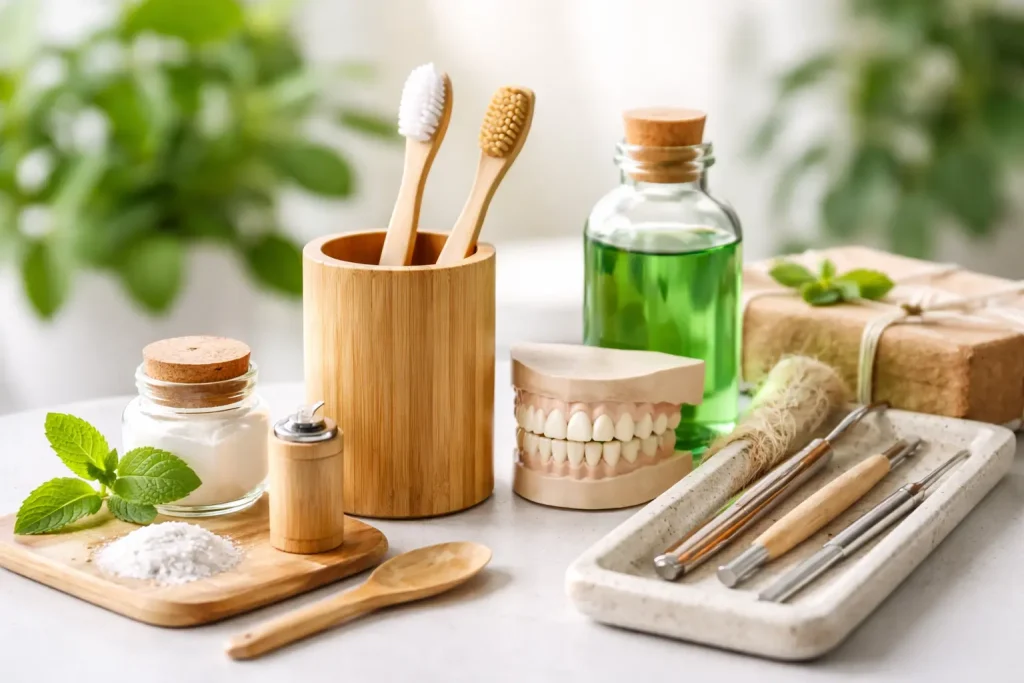
Sustainability is also extending to daily habits at home. More and more people are reviewing what products they use and how they use them.
Small changes with real impact
In 2026, habits such as the following will gain prominence:
- Choose brushes made with more durable materials
- Reduce the use of single-use plastics
- Avoid excessive consumption of unnecessary products
It’s not about doing it perfectly, but about making more informed decisions .
The role of the patient in sustainable dentistry
Sustainable dentistry does n’t depend solely on professionals or clinics. Patients will play an increasingly active role in their oral health care.
Responsible habits that will gain importance
- Maintain consistent hygiene routines
- Pay attention to your teeth and gums
- Attend regular checkups to detect problems early
Taking good care of your mouth from the beginning prevents more complex future interventions.
Digitalization and sustainability: a direct relationship
Technology also plays a key role in this trend, helping to optimize resources and processes.
Less paperwork, more control
By 2026, digitization will enable:
- Reduce paper usage
- Improve monitoring of oral health status
- Avoid unnecessary repeated testing
This translates into more efficient and responsible processes .
Oral health and long-term sustainability
Sustainable dentistry does not seek immediate results, but benefits maintained over time .
Thinking about the future of the mouth
A mouth that is constantly cared for:
- Keep your teeth and gums healthy for longer.
- It reduces the need for corrective treatments
- It fosters a more conscious relationship with one’s own health
Why will this trend continue to grow?
Sustainable dentistry fits in with a more conscious lifestyle that is already present in many areas.

A global change of mindset
More and more people are searching for:
- Take better care of yourself
- Understanding the processes
- Make responsible decisions
Oral health will be no exception.
2026 will consolidate a more conscious dentistry
Sustainable dentistry will be one of the most relevant trends in 2026. It’s not about big, radical changes, but about small habits, prevention, and informed decisions that make a difference.
Taking care of your oral health responsibly is also taking care of the future.